
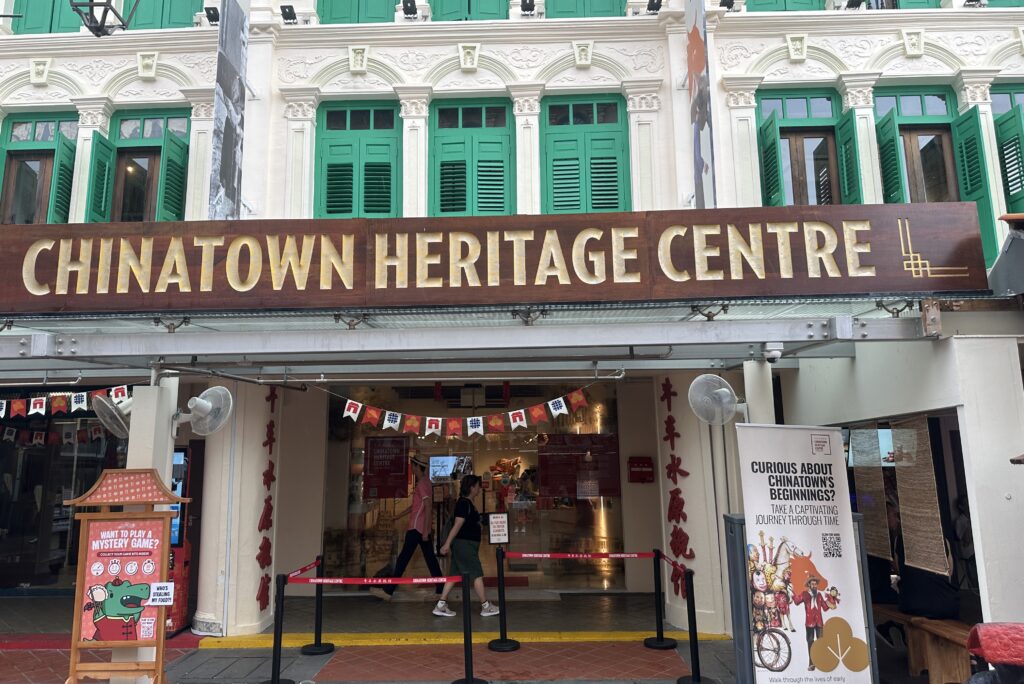
When we think of Singapore’s history, places like the National Museum, the National Gallery, or other heritage museums in the Civic District usually come to mind. But did you know there’s a more immersive and accessible option? Just a minute’s walk from Chinatown MRT, the Chinatown Heritage Centre (CHC) blends in quietly as a shophouse among cafés and stalls.
Upon ticket redemption, you receive a booklet of vouchers that give exclusive discounts and privileges with the “Friends of Chinatown.” These include F&B stalls, retail shops, and workshops to refresh yourself or explore further.
3 Levels to explore
CHC’s permanent exhibition spans all three levels of its shophouse, starting from level 1. You can have to climbing a flight of steps to levels 2 and 3. You will then make your way down to the exhibit on level 2 and level 1. The exhibition is curated into 4 different zones to help you experience and learn about Singapore’s history in a chronological manner.
Shophouse Living: Room Replicas (Levels 1 and 2)
Level One
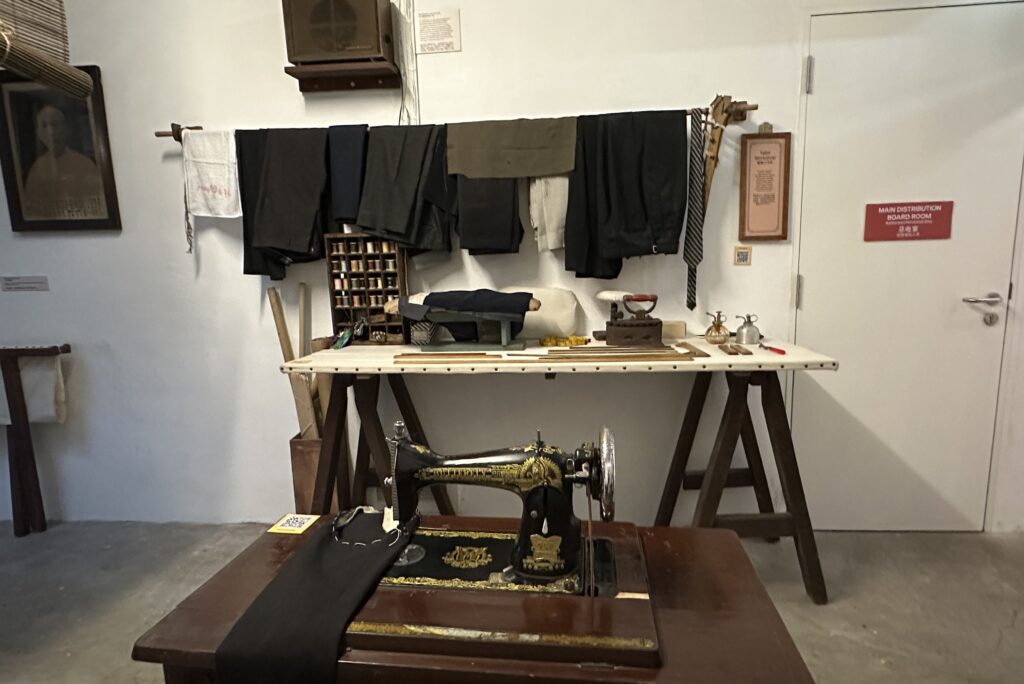
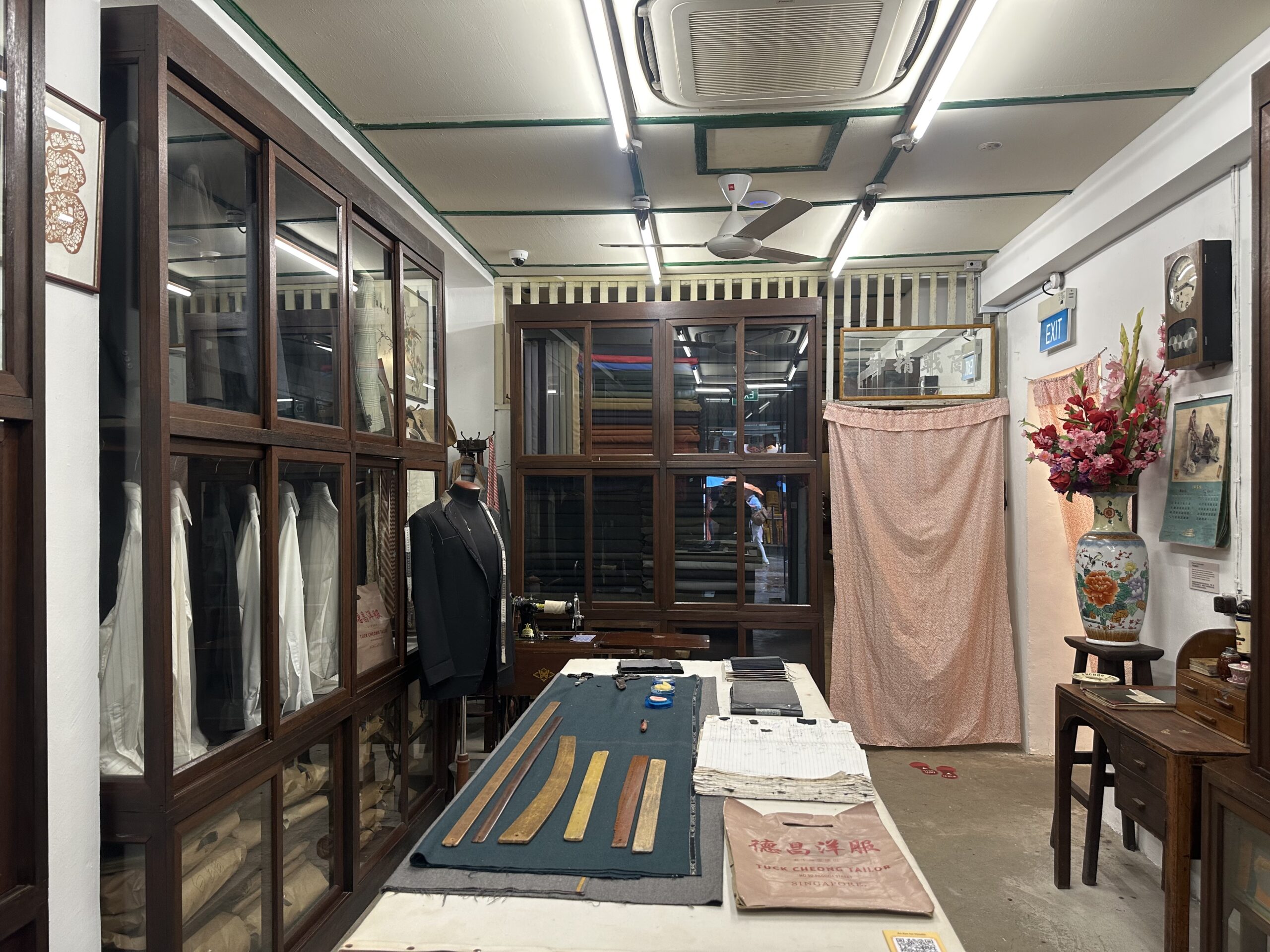
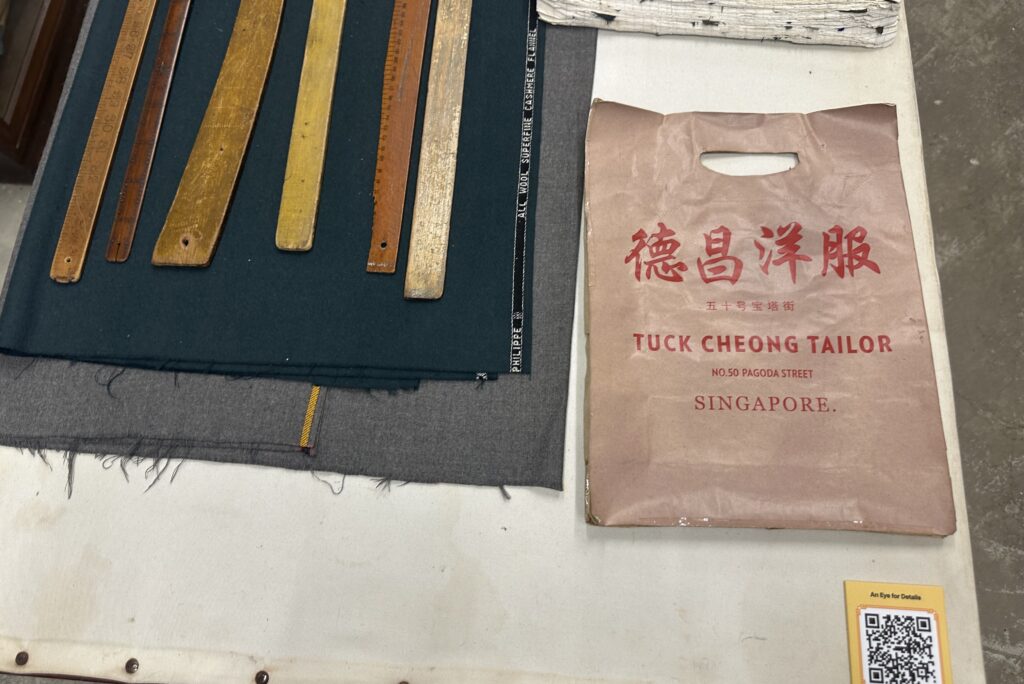
Upon entering the first room, you will feel as if taken back to an unrecognisable point in history. Surrounded by closets filled with tailored suits, an order book, a small vintage sewing machine at the corner of the room, and miscellaneous sewing items scattered across the space. While observing these items, you can also touch and flip through the loose items such as the customer order notebook and sewing tools.
While this simple sewing room might seem cozy for a tailor, the unglamorous work of these tailors lives beyond the flower curtain. A dusty dark lit room with sewing machines squeezed to a side, cigarettes and alcohol on the window sill, a narrow pathway, and the item which caught my utmost attention– a folded canvas bed. The narrative of this portion explains the long hours these tailors worked, with only a foldable canvas bed to rest on if they needed to work the night.
Further into this room holds a barricaded space rummaged with clutter. This space was where the main tailor and his whole family would live for supposedly the rest of their lives.
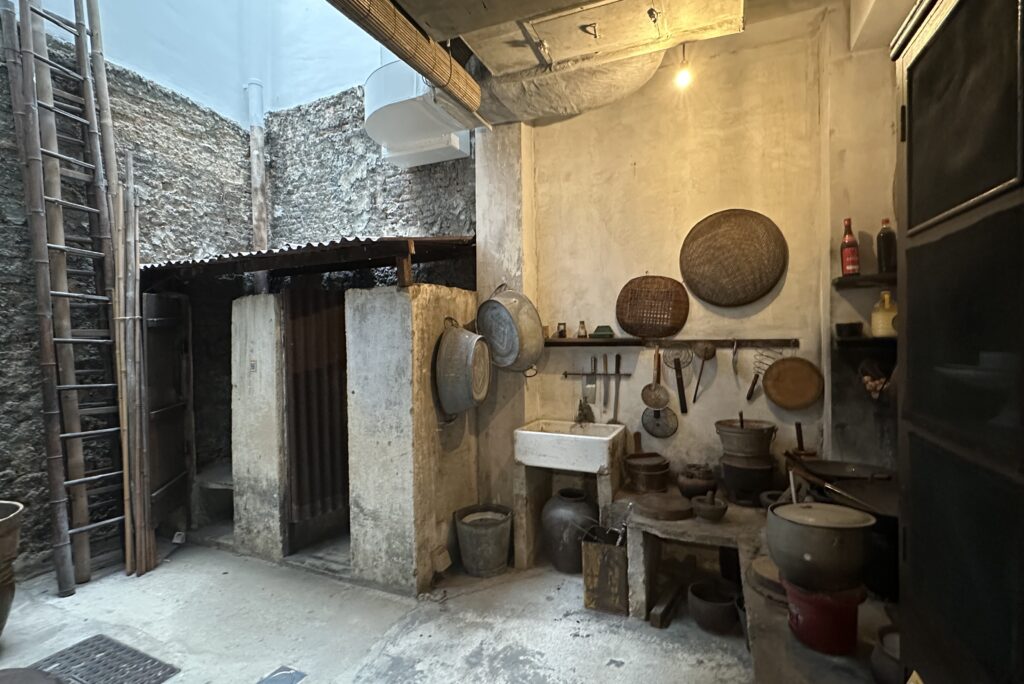
Level Two
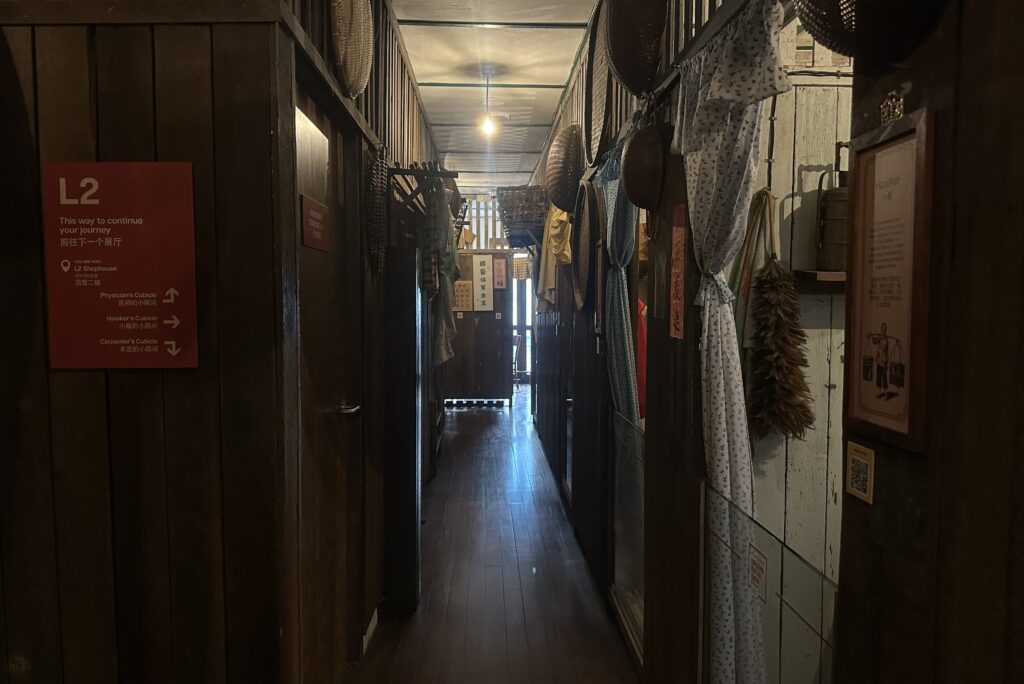
On to the second level, a whole series of barricaded spaces are displayed. One being a kitchen with kitchenware from the 1980s– some of which I recognise because they are still used by my grandmother today. The rest divided side by side; each booth containing vastly different props according to the professions of their owners.
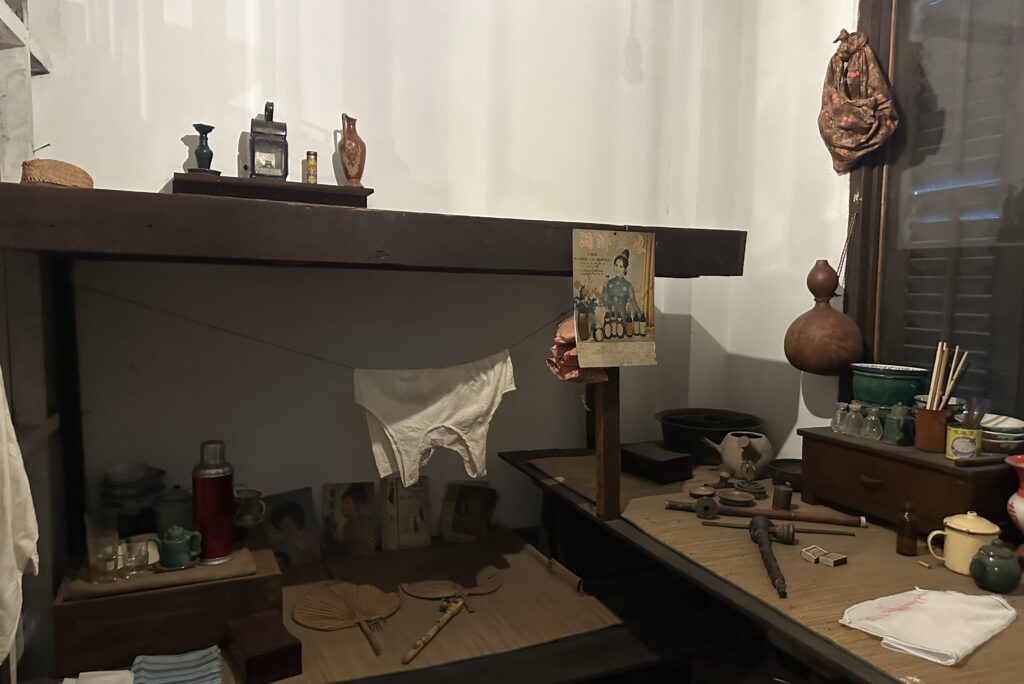
The biggest room belongs to a pharmacist’s family of more than 10, the smallest shared by 3 Samsui women. Something that stood out to me strongly was the amount of talismans present in the space. Pasted outside each individual room, phrases like “Stay Healthy”, “To Be Prosperous”, or the simple wish to “Be Safe” were written on red talismans using calligraphy.
To some extent, I wonder of fear and hope these migrant workers carried with them as they sought better lives.
Arrival & Settling in: History of Foreign Workers (Level 3)
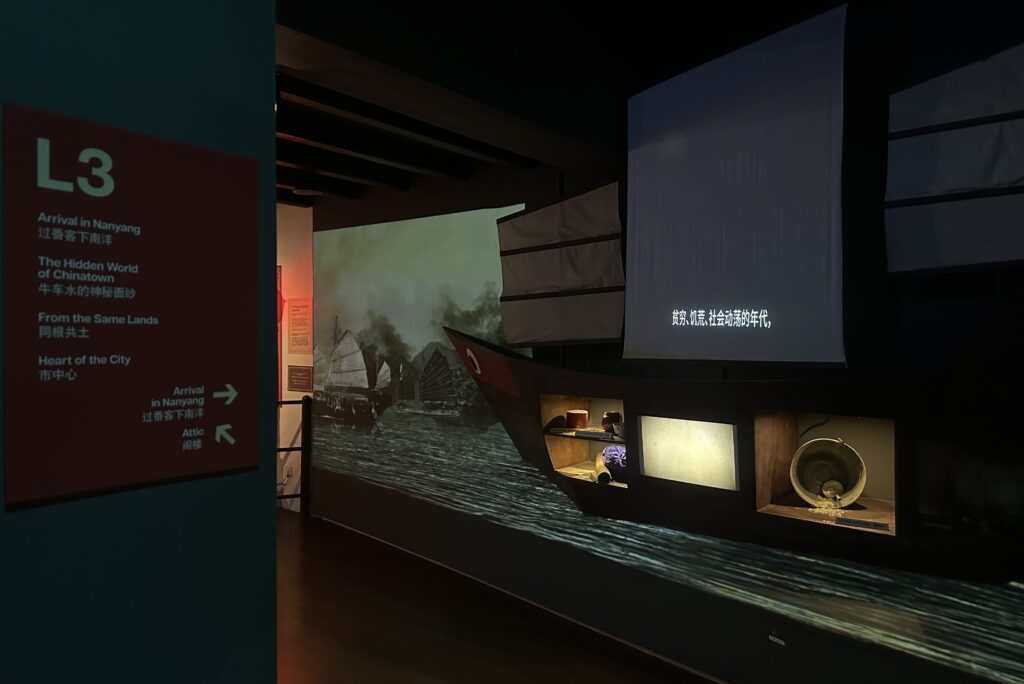
As you make your way up to level 3, a documentary-style video about the lives of Singapore’s foreign workers plays on loop, with Chinese and English subtitles to help you follow the storyline.
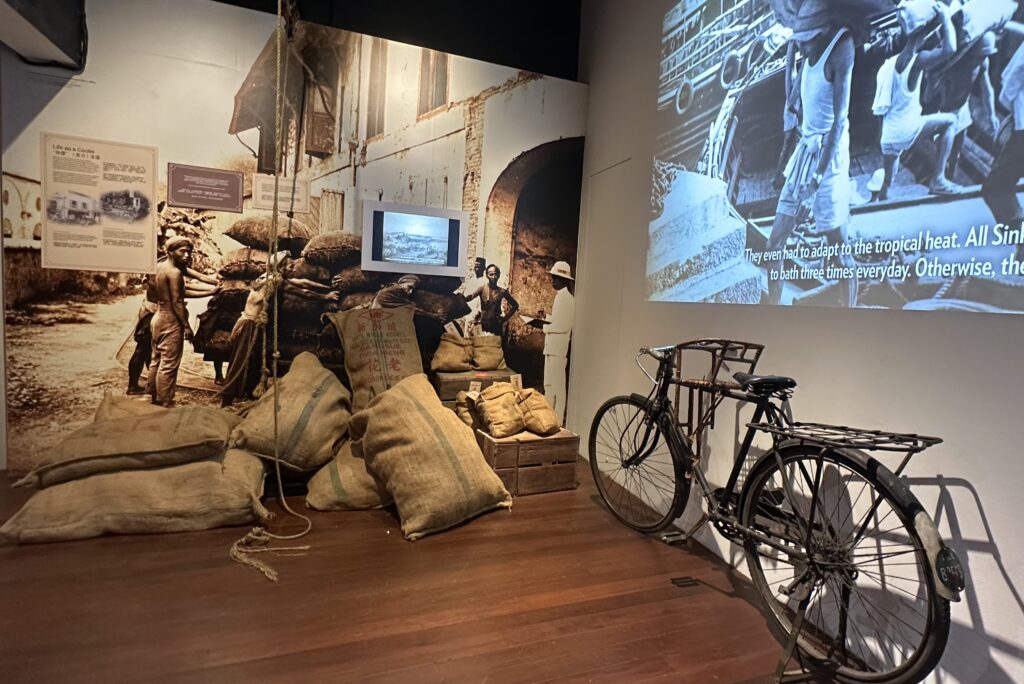
On the left of this film is a section talking about the coolies of Singapore. From how they were named, to their job scope, and sadly even to the amount of abuse they had endured or tragedies they had faced whilst working due to their societal status at the time. Paired with this wall of information are also large bags of rice piled on top of each other, showcasing the kind of physical labour these workers were carrying out without much recognition.
Continuing the exhibition to the other side of level 3, a narrow corridor filled with images of past practices founded by the foreign workers are displayed with each routine’s backstory. These routines were known as the notorious “Four Evils”, consisting of acts heavily banned and regulated in Singapore today. I especially appreciated because of the transparency of the tragedy and activities that happened in Singapore’s long past; allowing me to also appreciate the safety of Singapore and realise how far we have actually come as a country.
Migrant’s End & Heritage Brands: Founding of Education and New Professions
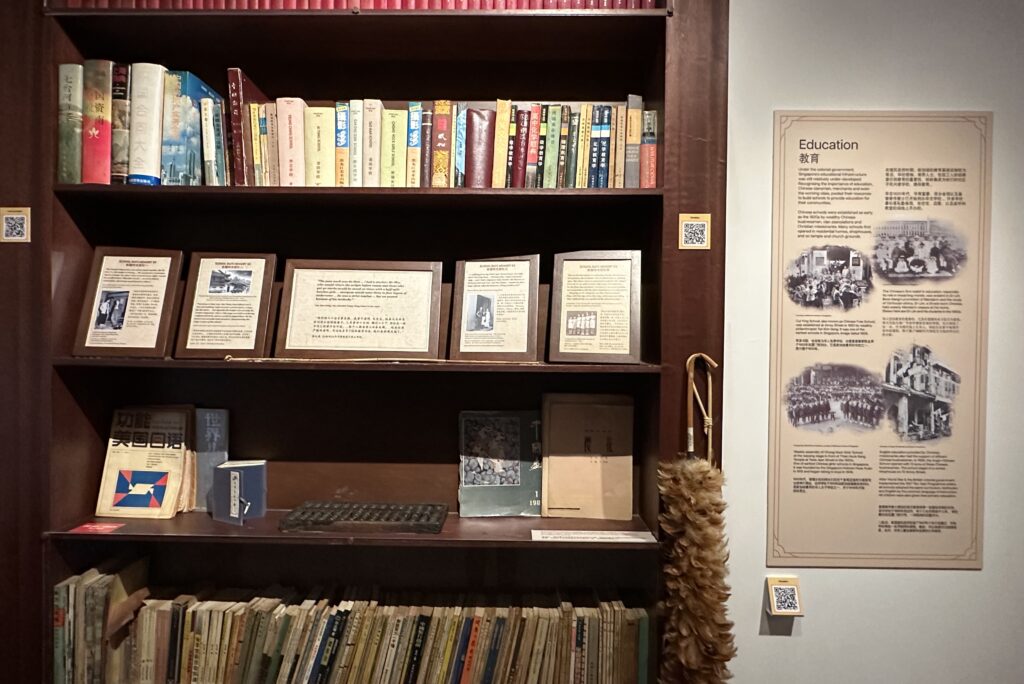
As we head back down to the second level, countless shelves of past textbooks, comics, and storybooks greeted us. With portraits of scholars whom our libraries and schools are named after such as Lee Kong Chian, Nee Kongsi, Lim Boon Keng, and Tan Kah Kee. We get to learn how exactly these figures contributed to our internationally renowned education system today.
Despite lengthy information pasted all over this floor, I find it to be valuable information and information that rightly should be in a heritage centre. Even if you might not want to read everything, at least you will have more than enough resources to learn from than none at all.
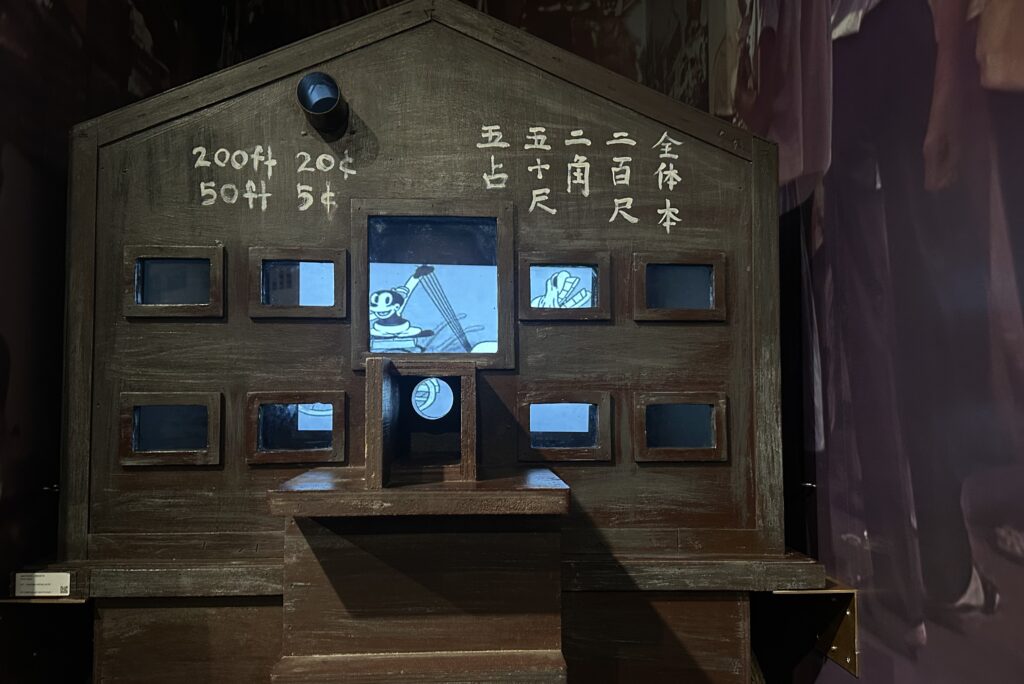
Apart from the founding of education in Singapore for teenagers, new jobs were also created to meet the needs of the then-growing Singapore. Never heard of jobs that were made and excelling, meaning higher job opportunities for existing jobs– it was a win-win situation no matter which route you chose. Unique jobs which no longer exist anymore consisted of moving cinemas, exotic markets, and scribers (also known as letter-writers).
Set-ups of these unique jobs are laid out through the whole floor, allowing for spacious viewing and interactions with these sets such as the roving cinema and opera performers.
Last but not least, displays of businesses surrounding medicine, jewelry, and effigy act as a testament to Singapore’s incredible turnaround of job prospects. These businesses are still active in Singapore today like our TCM Eu Yan Sang– now achieving 145 years.
Retail & Event Space: Taking a Piece of History Home
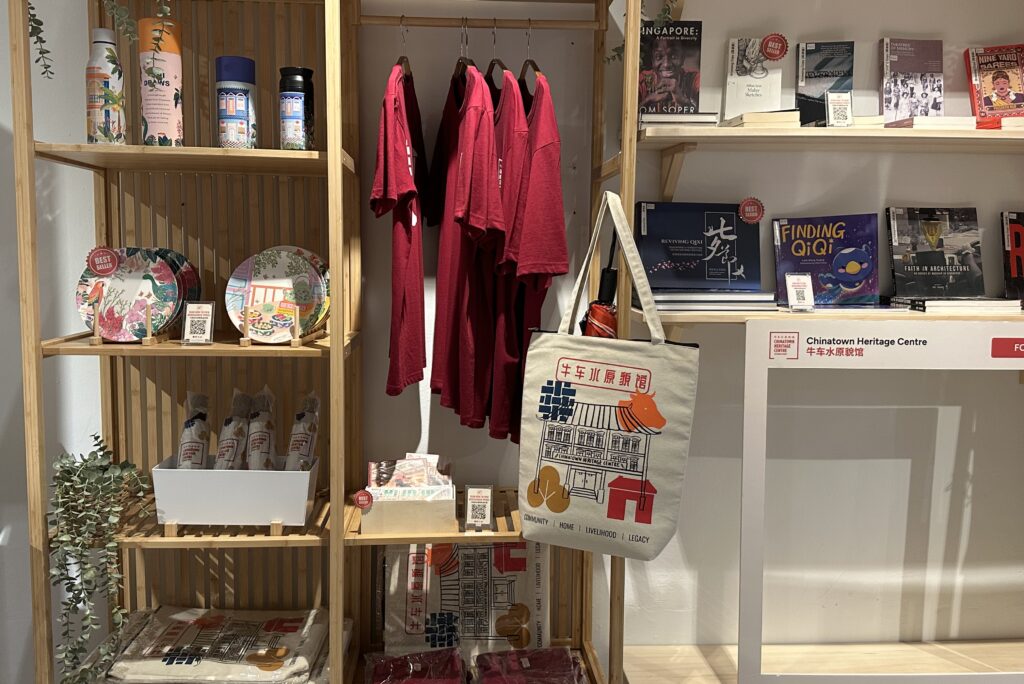
A spacious gift shop awaits at the end of your Chinatown Heritage Journey. Selling your typical items like books, ceramic plates, canvas bags; uncommon items also involve Singapore-centric scented perfumes, condiments like sambal, soy sauce, and sesame oil; and oriental medicated oil.
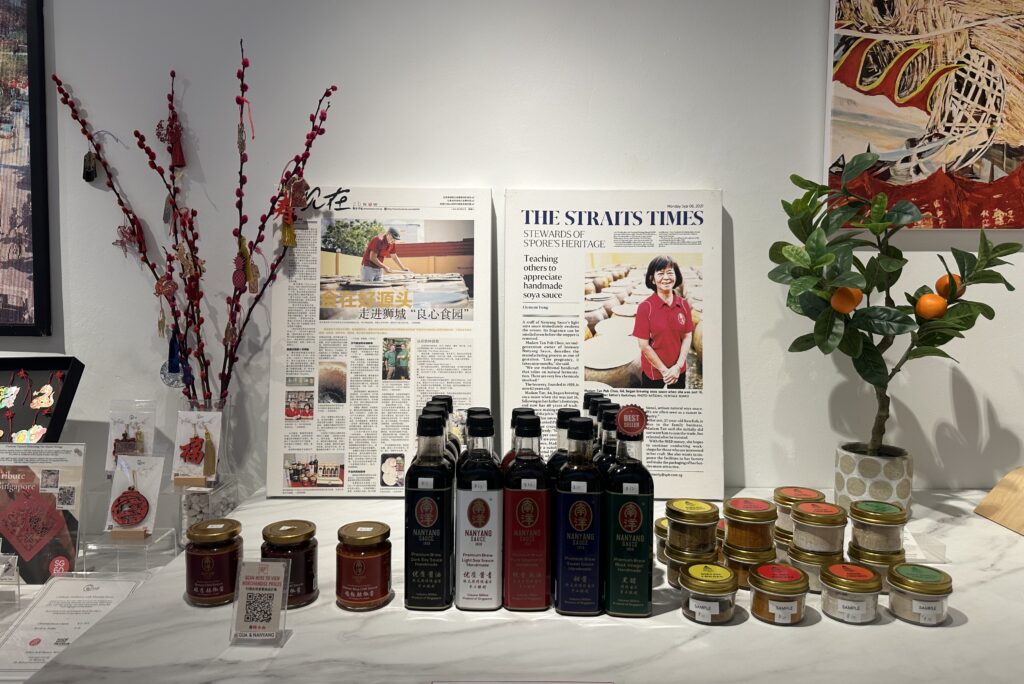
In light of SG60, the gift shop is currently offering a 10% discount on selected merchandise. Feel free to take a rest in their herbal bubble tea shop AMACHA with a cozy sunlit interior and refreshing teas. Using the vouchers you receive from the start of your experience, you can also get 20% off AMACHA’s items.
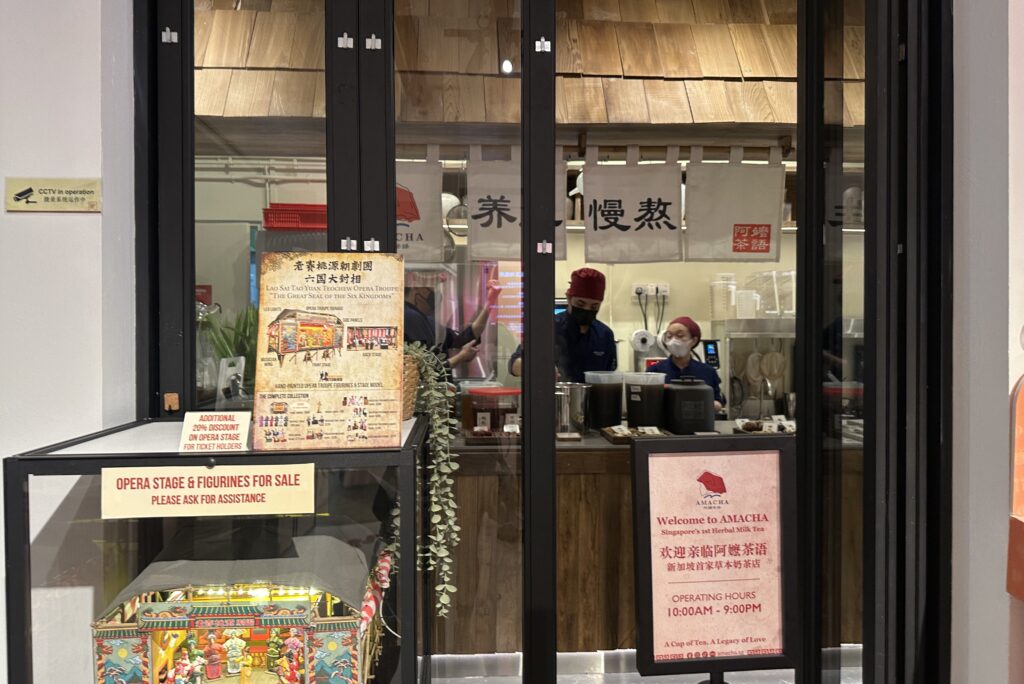
After browsing the gift shop and sipping on a refreshing tea at AMACHA, it’s hard not to feel like you’ve truly lived through a slice of Singapore’s past. The Chinatown Heritage Centre ties history, culture, and community together.
My Verdict
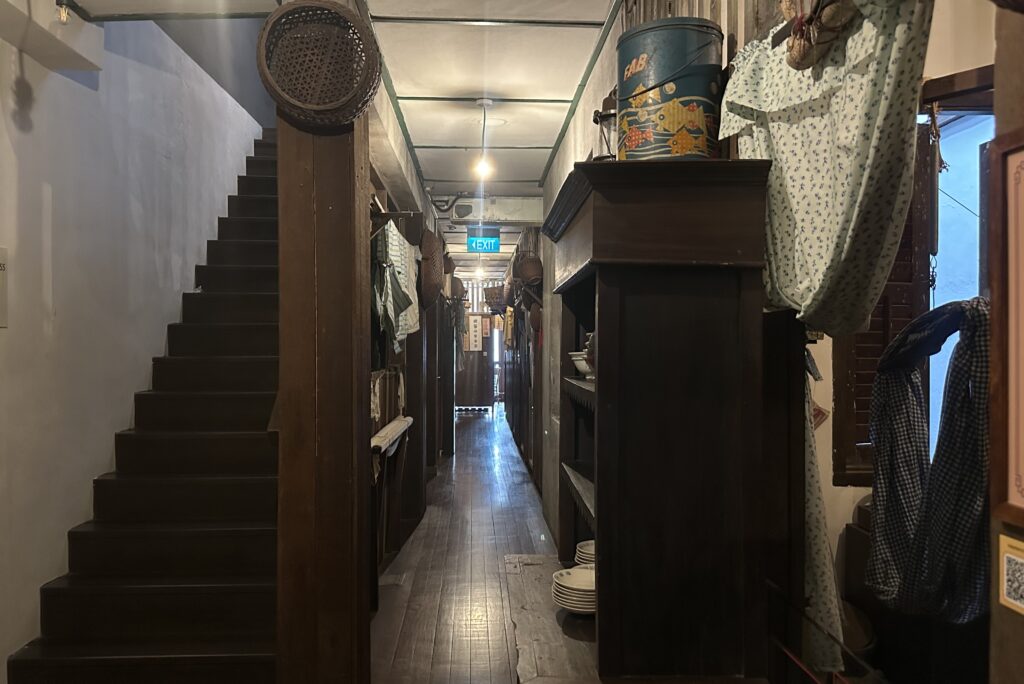
This experience at Chinatown Heritage Centre was a 9/10 to me, one of my highest scores yet. All of it was absolutely wonderful and it is in close proximity of the centre to the MRT. I enjoyed the immersive exhibits, informational narrative, heartwarming and heartbreaking stories shared in this exhibition. This exhibit also unveils the darker parts of history we might not have been inclined to know of. It was an exhibition that made me see the streets I was walking on differently, with a deeper respect for the lives that once filled them.
Do note that there are quite some steep stairs to climb up and it can get quite tiresome. This might simply be due to my lack of athleticism, but if anyone might be similar to me I would recommend wearing pants or attire that is easy to move in. For those who has difficulty in climbing the stairs, they can ask the staff for permission to take the lifts.
Chinatown Heritage Centre
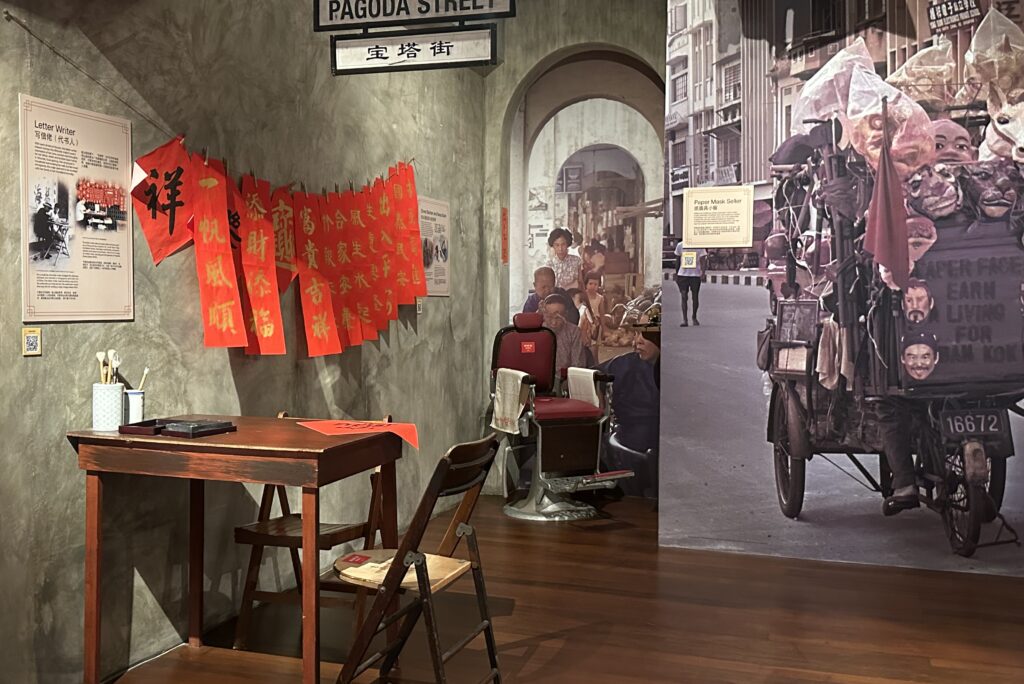
Address: 48 Pagoda Street, Singapore 059207
Opening Hours: 10.00am – 7.00pm, daily (Last Entry: 6.00pm)
Tickets Pricing: Singaporeans | From S$12 , Non-Singaporeans | From S$20
Admission is subject to limited capacity per timeslot. Booking tickets in advance is encouraged.
Tickets can be purchased via KKday.
All levels of the Centre are accessible by lift, allowing wheelchair users to visit our galleries. However, due to the nature of some exhibits, certain areas may not be wheelchair accessible.
From 1 September 2025, Chinatown Heritage Centre will be one of the participating spaces for SG Culture Pass credits.
Contributed by Alexis Lee
Check out the latest events in Singapore here.


